The Winemaker Studio May 11, 2013

photo (43)

http://anthonynappawines.com/tws_home.html

I love spring on the North Fork.  We stopped at the Bay View farm stand and bought fresh local spinach and asparagus and leeks and rhubarb and duck breast and bacon, and at Briermere for a blueberry crumb pie.  And now a short pause for a disquisition on Briermere pies…Yum.  Later that evening we had sautéed duck breast with a local red wine, garlic, and maple syrup reduction, accompanied by spinach salad with bacon and hard-boiled egg, with a dressing made from Vines and Branches olive oil and Cara Cara Orange White Balsamic vinegar, and steamed asparagus. All seasoned with artisanal North Fork salt!  Pie for dessert, of course.  With it we had Bordo wine from Anthony Nappa, about which more later.

photo (45)

After all that shopping we felt thirsty, so we decided to stop into the Winemaker Studio on Peconic Lane.  This attractive store front used to be called The Tasting Room, and though the name and cast of characters have changed, the idea is the same:  to showcase smaller wine producers who lack a place of their own.  Run by Anthony Nappa, it features his wines as well as wines by others whose “day job” is as winemaker for other vineyards.  They buy their grapes, some from upstate, and make their wines at Premium Wine Group, a facility housed at Leib Cellars but used by many.  Nappa used to make wines for Shinn; Russell Hearn, originally from Australia, was the winemaker for Pellegrini until he and his wife Sue decided to make their own label, SuHru (Sue and Russell, with an H for Hearn); John Leo works for Clovis Point and also makes his Leo Family wines; and Erik Bilka works at Premium and also makes his own Influence brand.

The Studio has several features which causes it to stand apart from most tasting rooms, aside from the variety of different labels it offers, because in addition to wine it also offers a beer taste from Southampton Publick House, some coffee drinks, and local gins and whiskies, plus cheese or cheese and salumi platters for $15.  The gin brands include McKenzie and Glorious, and the whiskies and ryes include Pine Barrens and Greenhook.  If you go there for Happy Hour—from 5-7 p.m.—you might want to try them.  The airy room includes a nice bar plus little tables and chairs, with art on the walls by local artists.  Sometimes there is a dog or two in residence, though not today.  Oh, and the room is attached to a pleasant little food shop which includes both local brands and some hard to find labels.
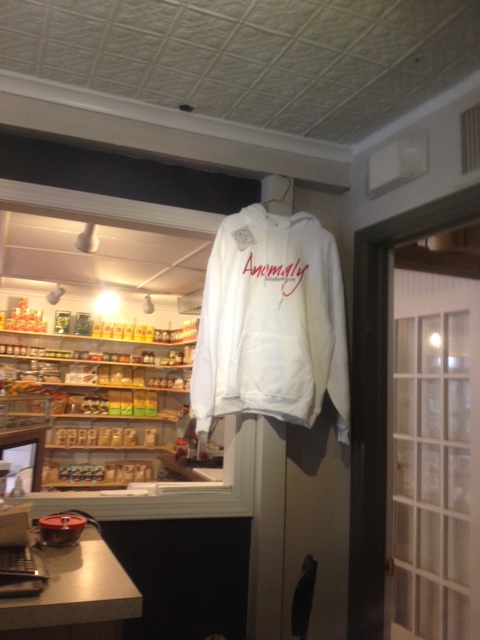
photo (40)

The wine menu offers nine tastes, at $2-$4 per taste, and we opt to share four whites and four reds, skipping the lone rosé.  Chris, our server and we believe the manager of the shop, is impressively knowledgeable.  We overheard him giving very good advice to some neophytes to the region on which tasting rooms to visit based on which wines they had liked of his selections.  He also knows all about the wines he serves, and yet was tactful enough to let us sip in silence when he saw that was what we preferred.

  1.  2011 Nappa Anomaly                                    $19

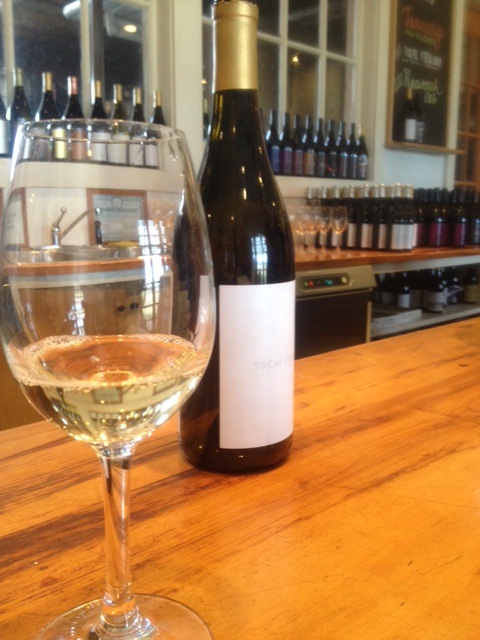
This wine is an anomaly because it is a white wine made from pinot noir grapes, and since it spends no time on the skins it is white, not the rosé one would expect.  Yet the aroma reminds us of strawberry candy, a smell one would associate with a rose.  However, the taste is very much its own thing:  some earthiness, some citrus—perhaps key lime—some minerality, dry but fruity and quite delicious.  It is all steel fermented, so it is quite a refreshing, clean drink.

photo (41)

2.  2012 SuHru Pinot Grigio                                              $16

I often drink pinot grigio, but this does not taste like any I have had.  The aroma is sweet, like white grape juice, with a bit of that cat pee smell.  The taste is also sweeter than a typical pinot grigio, maybe because the grapes come from upstate.  The tasting notes say pear, and I don’t disagree. Though many would like it, it’s not for me.

3.  2012 Nappa Luminous Riesling                                 $18

This is another wine made from upstate grapes, and though Chris categorizes it as “on the dry/off dry cusp,” we find it a bit sweet.  As is typical of the wines in this room, it is not typical!  An aroma of honeysuckle heralds a goldenrod honey and pineapple taste, with a hint of citrus.

4. 2012 Nappa Sciardonné Chardonnay                       $18

Pronounce the name of this wine in the Italian manner, in which “sci” is pronounced like a soft “sh,” and you’ll get the joke of this Italian-style wine’s name.  Although this is a steel-fermented wine it does undergo malolactic fermentation, and so has some of the buttery taste associated with chardonnays.  However, it does not have that overly buttery flavor of an oaked chard, and the aroma of “pine forest after a rain”—my husband’s idea—is quite lovely.  Very buyable.

photo (42)

 5. 2012 Nappa Bordo                                                           $20

We sniff and discuss—tomato leaves?  Maybe.  Definitely vegetabley, with a hint of minerals.  Good fruit, with some typical cabernet franc tastes of berries, but not too heavy. The color is a light and pretty red.  This would go perfectly with the duck we just bought, we think, and are later proven correct. Buyable.

6.  2011 SuHru Shiraz                                                           $22

The syrah grape is called shiraz in Australia, and Hearn is from Australia, so…I tend to like syrahs or shirazes, whatever they are called, and this is no exception.  A slight cardamom aroma leads to dry but good berry tastes with some nice depth.  Unlike some shirazes, this is not overpowering.  They say a taste of Earl Gray, but I don’t get it.  However, this is definitely a buyable wine.

7.  2010 Nappa Dieci                                                             $35

To get the reason for this name, look no further than the date.  A blend of 37% cabernet sauvignon, 44% merlot, and 19% cabernet franc, this is a Bordeaux style wine, though not as interesting as a French Bordeaux at this price point.  However, it is a pleasant wine and would be good with food.

8.  2007 Leo Family Cellars Red Blend                           $40

Aromas of mineral, earth, and blackberry are not surprising for this merlot/petit verdot blend.  This wine is really interesting, and we comment that it is a humble name for an ambitious wine with lovely depth of flavor. We also admire the label!
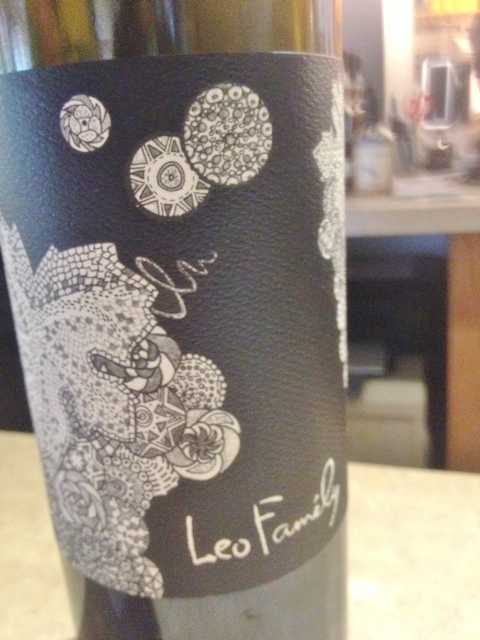
photo (44)

Intrigued by the liquors on offer, we try the McKenzie and Glorious Gins, and end up buying a bottle of Glorious Gin, which has a really interesting herbal flavor and makes a very good Gibson later that night.  We also get two each of the Sciardonné, Bordo, and Shiraz.

Reasons to visit:  A chance to taste some experimental and interesting wines in a pleasant setting; availability of local liquors and beer as well; Happy Hour ; with the little shop next store you could buy dinner (except for produce) and something to drink with it as well; an ever-changing roster of wines.

Channing Daughters Winery February 2, 1213

http://www.channingdaughters.com/

We decided to celebrate Groundhog Day with a visit to the South Fork, especially since such a trip is easy in the winter, when we don’t have to contend with the traffic on Route 27.  We started with a visit to the new Parrish Art Museum in Water Mill.  Designed to be reminiscent of a typical Long Island potato barn, it is a long one-story building, with a soaring roof and multiple skylights, letting in plenty of sunlight on this cold but bright day.  Parrish Art Museum

We particularly enjoyed a gallery devoted to William Merritt Chase and his lovely paintings of Long Island scenes as well as his classic portraits.  Another room full of Fairfield Porter paintings was also interesting.  We then headed to our favorite winery, Channing Daughters.  I did write about a visit there last summer, but then we only concentrated on their roses.  This time we decided to do a standard tasting.

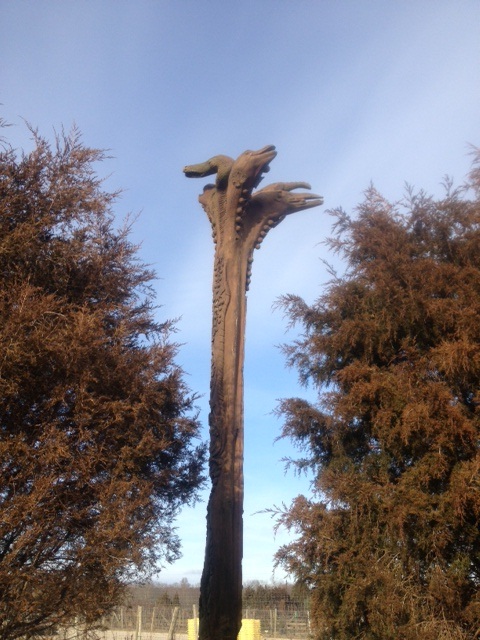
Channing Daughters is located on Scuttlehole Road, a charmingly rural road just outside of Sag Harbor (which we used to call the un-Hampton, though it is getting more and more Hamptonized).  Down a pebbled driveway one comes to the small cozy tasting room, which looks out one side to the vineyard and the other into the cellar, where one can see the huge vats of future wine.  The owner of the winery, Walter Channing, named it for his four daughters.  He also has decorated the tasting room and the grounds with his wood sculptures, many of them made from whole trees, with the roots on top, carved into various shapes.  Here’s one from the parking lot:

Tree sculpture

On this cold winter day, there were only a few small groups in the tasting room.  The very well-informed servers noted that they do not allow bus-loads!  The standard tasting that day included six wines for $10.  As wine club members our tasting was free, and we could have chosen any wines from a list of about 20, but we decided not to.

1)  2010 Sylvanus     $24

Sylvanus is named for the legendary Green Man, the Roman equivalent of Pan, the god of woods and fields, and also for the field where this wine’s grapes are grown.  One of the aspects of Channing Daughters we like is their interest in experimentation, and for this wine they used all grapes grown in one field, for a blend of 60% muscot, 30% pinot grigio, and 10% pinot bianco.  An aroma of oranges and perfume precedes a nicely dry wine with pleasant fruit and a hint of almond flavor.  I would like this wine better with food, rather than as a sipping wine, and it would pair well with local oysters or other briny seafood.

2) 2010 Tocai Friuliano     $24

Fermented almost completely in stainless steel, with only a hint of oak, this lovely wine has an almost honey-like texture with a hint of grapefruit at the end.  I could see sipping this on a nice summer afternoon, perhaps with some tomato crostini.  We also notice that, unlike some places, the wines here are not too cold, and the servers confirm that this is indeed the policy.  We like this because when a wine is too cold you can miss the nuances of its taste.

Channing white

3) 2010 Ramato     $34

As a transition from white to red, we sample what is called an “orange” wine, a white pinot grigio fermented on its skins to give it a subtle orange color and interesting complexity.  I detect a faint aroma of orange candy and, not surprising given its 6 months in oak, a taste of oak.  We decide its somewhat unctuous texture does not make it our favorite, though it would pair interestingly with lemon curd or lemon meringue pie (which, my husband notes, he never eats!).

4)  2010 Due Uve     $22

Due uve means two grapes, and that is what this wine contains–syrah and merlot.  Because of Long Island’s climate, you’re never going to get “big hot wines,” says the server, and agrees that this wine exhibits the typical local earthiness which some people “go crazy for” and others dislike.  We like some earthiness, but not when it overwhelms.  This wine has nice fruit–berries–and some hints of black pepper, and just a hint of earth.  It spends 16 months in oak.  I’m thinking it would be good with pasta with a short ribs sauce.

5)  2008 Sculpture Garden     $27

Given that there actually is a sculpture garden on the grounds (ask the server for directions), and that the oldest vineyard (planted in 1982) is named Sculpture Garden, it was perhaps inevitable that one wine would be named this.  Plus the merlot grapes in it come from that vineyard. I could see wandering the sculpture garden on a nice warm day with a glass of this easy-drinking wine in hand, but it’s too cold today!  A blend of 95% merlot and 5% blaufrankisch, this wine has a pleasant berry aroma and cherry tastes, with some earthiness, some pepper, and not a lot of depth.

6)  2007 Mudd     $40

No, the name is not a misspelling of mud!  This wine’s grapes come from the North Fork vineyard run by Steven Mudd, a well-known vineyard manager who works with a number of wineries.  Terrific wine!  This is a Bordeaux blend of 60% merlot, 21% syrah, 9% dornfelder, 5% cabernet franc and 5% blaufrankisch with an aroma reminiscent of a pine forest, and lots of black fruits and plum flavors.  Definitely yummy, and would be good with roasted lamb shanks, as its dryness would cut the fat of the lamb while it has enough fruit not to be overwhelmed.

Channing red

Extra!  Because he has it out, the server asks if we would like to try the Over and Over.  We would.

7)  Over and Over–Variation 5      $37

It is hard to explain the method used to make this wine, so perhaps the best I can do is refer you to Channning Daughters own web site, where it is explained in detail, but basically this is made using the “solera” method, where some wine from various years is combined with wine from other years and then fermented together.  We had tried one iteration (probably 3 or 4, muses the server) we did not care for, but this one is definitely a success, with blackberry flavors and aromas.  Nice.

http://channingdaughters.com/wine_order/index.php

Reasons to visit:  One of best wineries on Long Island, with lots of interesting experiments.  In addition to the above listed wines, I also love their L’Enfant Sauvage, made with wild yeast, their Scuttlehole Chardonnay, which is basically our “house” white, and their Research Cab, a good red.